
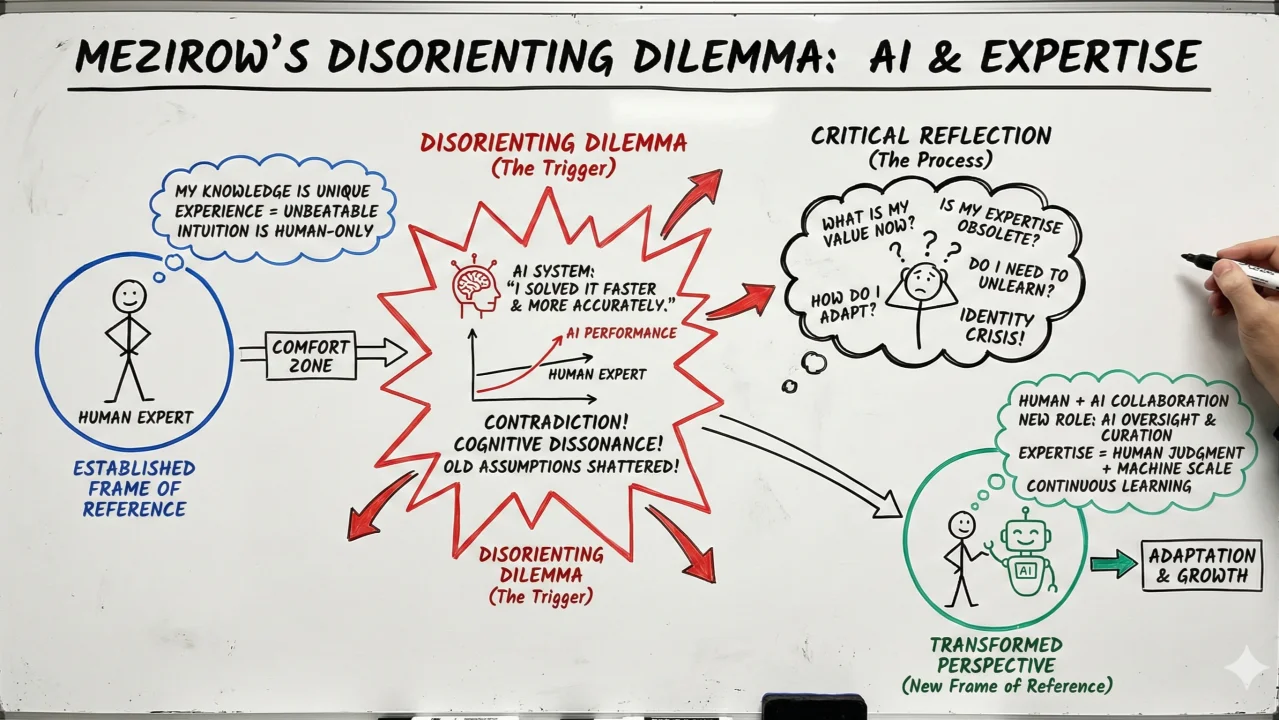
There’s a moment that changes everything.
When was the last time AI genuinely surprised you?
I had my first experience of this in early 2023. It changed the trajectory of my life. Since then, I’ve been puzzled watching smart, capable professionals never have their moment.
If you’ve never felt this after using AI (usually followed by three sleepless nights)... then this article is for you.
An episode of Beyond the Prompt helped me think about why. Anthropologist Mikkel B. Rasmussen describes insight as the gap between how we think the world works and what we find when we look more closely.
All great insights come from a gap between how you think the world is and what it really is, what reality is.
Mikkel B. Rasmussen · Beyond the Prompt
My take? Many of us are working very hard to make sure that gap never opens. We’re operating behind well-fortified defensive walls.
The three walls we build
Wall 1: “AI can’t do what I do.”
This is the expertise defence. We test AI casually, find it lacking in some specific way, and conclude it’s not ready.
Sometimes that assessment is fair. It’s also worth asking how much of a chance we gave it. What context did it have? What did we tell it good looked like? Did we try again?
There’s a lot wrapped up in believing that our expertise is unique to us.
Wall 2: “Time is money.”
If you charge by the hour, or if your organisation measures productivity in hours worked, AI can create an uncomfortable problem. Doing something faster can threaten your revenue model.
So you keep doing things the slow way... it is easy to ignore AI when you’ve got no incentive to change.
Wall 3: Professional identity
Underneath both walls is something deeper. It’s that old small talk at a party thing... So what do you do? And out comes the job title and the company.
Our professional identity is often built on a formula: expertise + effort + time = value.
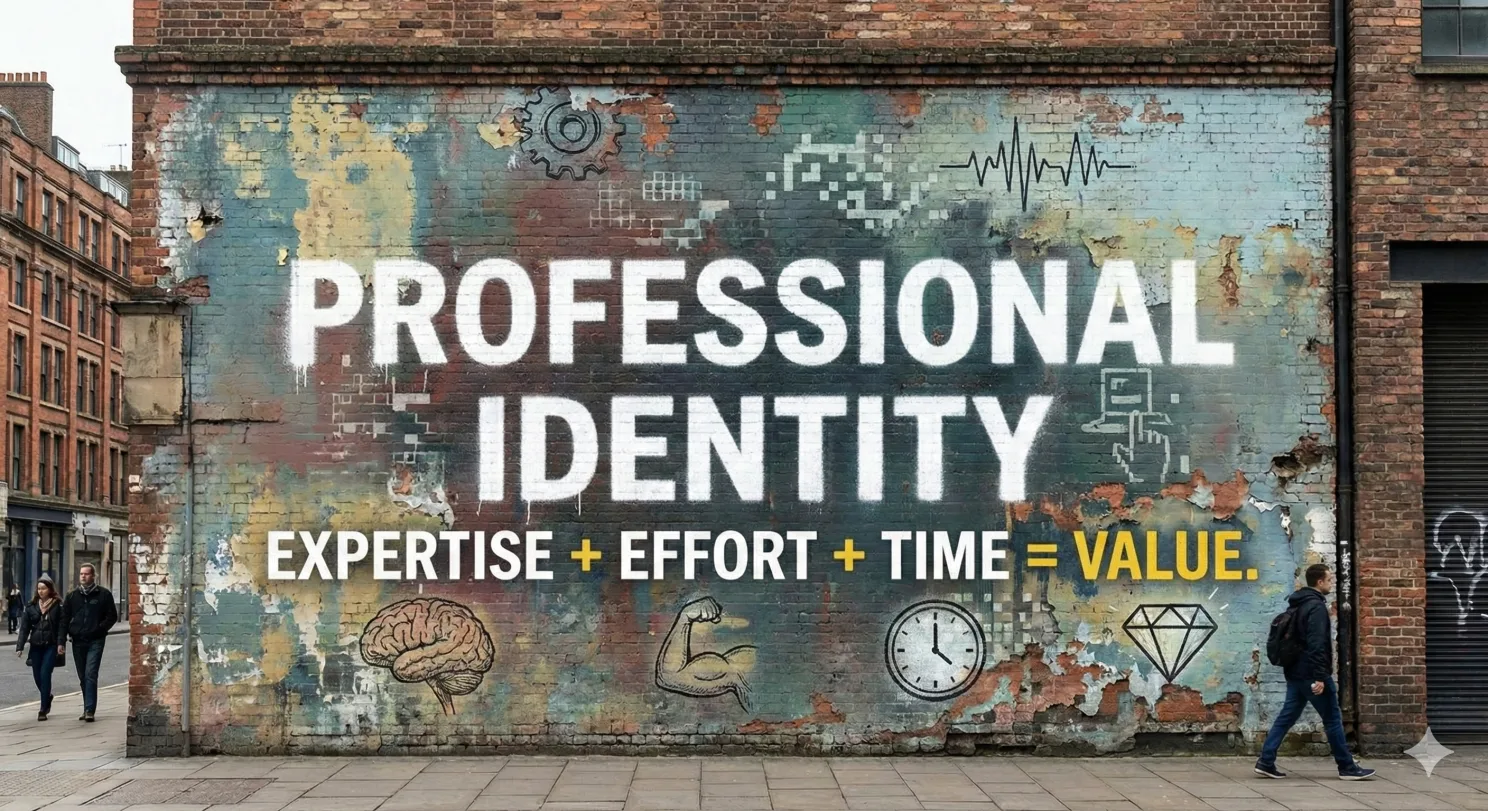
If a machine can produce in minutes what took you years to master... what does that even meeeeean???? 😱
It can trigger some pretty big questions about your identity, your career, your business model. None of that is easy.
Who’s got time for that right!?
But seriously... who has time for anything else.
The mirror
If you’re constantly disappointed with AI’s outputs, try asking: What assumptions am I bringing? What am I not telling it? What would I need to see to change my mind?
That gives you something you can test. Pick a task, define what a good result needs to do, give it the context and examine the output. Refine, iterate and push back. See what happens.
You may find a real limitation. You may also discover that the first response was a very poor measure of what was possible.
All these walls we build are deeply human responses to feeling threatened. It’s worth knowing when they’re making the decision for us.
If you’re willing to test your walls...
Here are a few ways to start. Use a task and information you’re comfortable experimenting with.
- Let AI interview you. 10 minutesAsk it to help you examine what you believe about AI and your work. Try this:
Let it play back your own logic. You still get to question its conclusions.
I work in [your field]. Ask me probing questions, one at a time, about what I believe AI can and cannot do in my work. Challenge my answers and help me identify assumptions I could test. Don’t assume that AI can do everything.
- Give it a proper go. 30 minutesTake something you’re confident AI can’t do well, something core to your expertise. Include context, examples and clear criteria for success, just as you’d brief a person with no prior knowledge of your business or role. Refine, iterate and push back. Compare the result with the criteria you set.
- Ask yourself the harder question.What would have to be true for you to have an “oh shit” moment with AI? What would you need to see? And honestly... are you avoiding the conditions that might show you?
The gap between how you think the world works and what you discover when you test it is where the insight lives. Give yourself a chance to find it.
Sources and further reading
Sources behind the article. Links open in a new tab.
Beyond the Prompt: Mikkel B. Rasmussen
- Why AI Gets People Wrong: the full episode Mikkel B. Rasmussen in conversation with Jeremy Utley and Henrik Werdelin.
- Episode notes and transcript Published by Beyond the Prompt.
Paul Roetzer: the Move 37 moment
- The Move 37 Moment for Knowledge Workers Keynote recorded at MAICON 2025.
Written by Nadia Ellis, founder of Curiosity.
Originally published on LinkedIn, 15/01/2026.